Al Filreis brought together James Berger and Richard Deming (who traveled together from Yale) and Sophia DuRose to talk about two poems by Ron Padgett. The poems are “The Austrian Maiden” and “Joe Brainard’s Painting Bingo.” Our recording of “The Austrian Maiden” comes from a February 26, 2003, reading Padgett gave at the Kelly Writers House; the poem had just recently been published in Padgett’s book You Never Know (2002). The recording of “Joe Brainard’s Painting Bingo” — a poem published in Great Balls of Fire (1969) — was performed at a November 20, 1979, reading given at a location that is now (sadly) unknown. That reading in its entirety is available at Padgett’s PennSound page; the recording comes to us courtesy of the Maureen Owen Collection of Greenwich Village Poetry, now housed at the Yale Beinecke Rare Book and Manuscript Library.
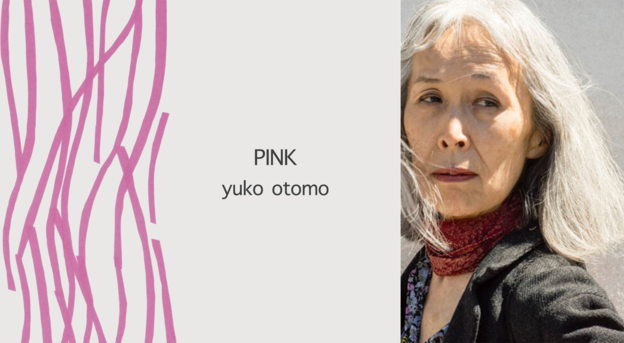
Cover of 'PINK' and Yuko Otomo, photographed by Donald Martineau-Vega
Written in Japanese and translated by the author, Yuko Otomo’s PINK is a paean to Paris, to her revered precursor, Baudelaire, and to her soulmate, the American poet Steve Dalachinsky. As she explains in a generously spontaneous afterword, Steve and Yuko visited Paris nearly every other year for 15 years or so.
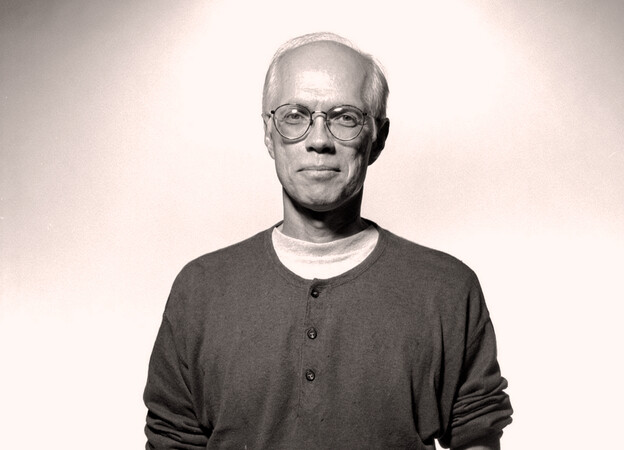
We at Jacket2 regretfully share the news that beloved poet and critic Tyrone Williams passed away on Monday, March 11, at the age of 70. The author of numerous books, including c.c. (2002), On Spec (2008), The Hero Project of the Century (2009), Adventures of Pi (2011), Howell (2011), As Iz (2018), and washpark (with Pat Clifford, 2021), Williams had recently joined the SUNY-Buffalo faculty as David Gray Professor of Poetry and Letters after a long teaching career at Xavier University in Cincinnati.
We at Jacket2 regretfully share the news that beloved poet and critic Tyrone Williams passed away on Monday, March 11, at the age of 70.
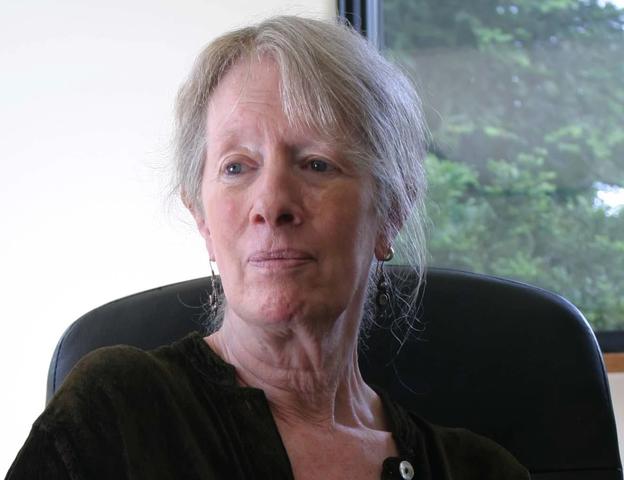
Lyn Hejinian, American poet and essayist, died on Saturday, February 24. Born Carolyn Frances Hall on May 17, 1941, and raised in Berkeley and later Cambridge, Massachusetts, she graduated from Harvard University in 1963.
Lyn Hejinian, American poet and essayist, died on Saturday, February 24. Born Carolyn Frances Hall on May 17, 1941, and raised in Berkeley and later Cambridge, Massachusetts, she graduated from Harvard University in 1963. Her children, Paull and Anna, were born while she was married to the physician John Hejinian.
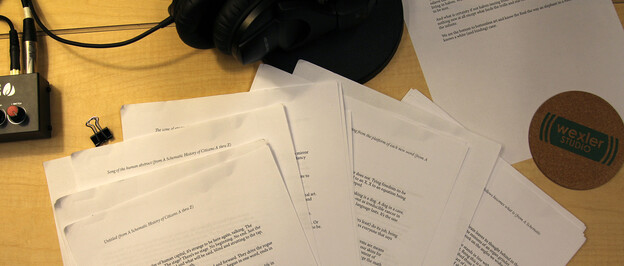
In this episode, poet Larry Price joins Al Filreis and William Fuller for an interview in the Wexler Studio at the Kelly Writers House to discuss his new book 1/0 (“one over zero”), as well as some of his earlier work.
Vox Audio was initiated in 2001 to promote several poets to a possible community interested in such work. The CDs were distributed largely by mail, free of charge. As the name implies, Vox also reflects a regard for voice in poetry – that is, for the kinds of involvement not available from the page, like intonation or subtleties of sound and rhythm that require voicing.
Vox Audio was initiated in 2001 to promote several poets to a possible community interested in such work. The CDs were distributed largely by mail, free of charge. As the name implies, Vox also reflects a regard for voice in poetry – that is, for the kinds of involvement not available from the page, like intonation or subtleties of sound and rhythm that require voicing. This interest grew from the work of Pound, H.D., and Williams, especially from Williams’ concern with a speech-based poetic and emphasis on contact and locale, what might now be termed context, the dialogic.
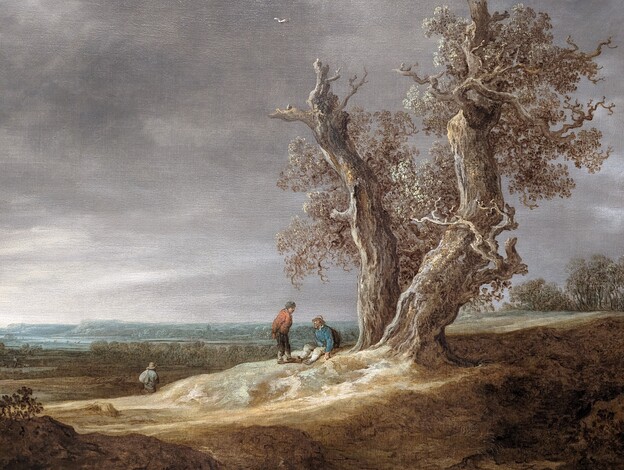
Jan van Goyen, Landscape with Two Oaks, 1641, Rijksmuseum. Photo by the author.
What, then, would a "poetics" of art writing look like, one which is responsible to the facts of the matter, yet still laying the field open for extravagations and speculations?
New Grounds for Dutch Landscape Lytle Shaw OEI editör, 2021, 304 pages, $19.95, ISBN 9789188829085
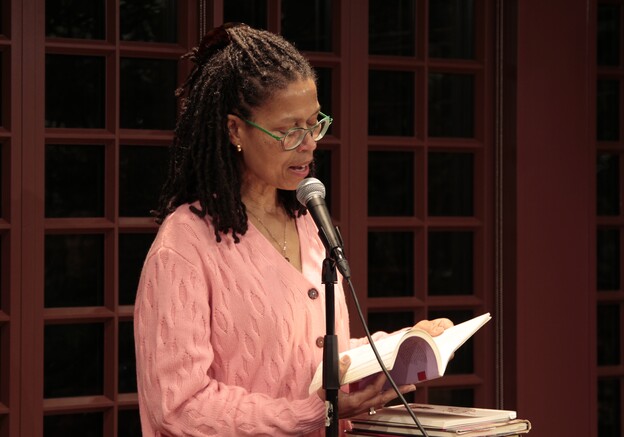
In this PennSound podcast, poet Evie Shockley sits down in the Wexler Studio at the Kelly Writers House for an interview about her work with Al Filreis, Tyrone Williams, Aldon Nielson, and William J. Harris.
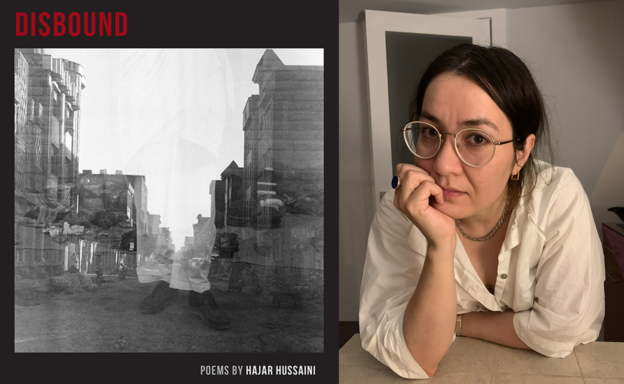
Before the first poem of Afghan poet Hajar Hussaini’s debut collection Disbound, Hussaini already resists the limits of the book’s form, positioning her text in a conflict between sequence and chaos, what is threaded together and what imminently, and presently, comes apart.
Disbound Hajar Hussaini University of Iowa Press, 2022, 77 pages, $19.95, ISBN 9781609388676

In Memoriam: Tyrone Williams (1954–2024)
We at Jacket2 regretfully share the news that beloved poet and critic Tyrone Williams passed away on Monday, March 11, at the age of 70. The author of numerous books, including c.c. (2002), On Spec (2008), The Hero Project of the Century (2009), Adventures of Pi (2011), Howell (2011), As Iz (2018), and washpark (with Pat Clifford, 2021), Williams had recently joined the SUNY-Buffalo faculty as David Gray Professor of Poetry and Letters after a long teaching career at Xavier University in Cincinnati.
We at Jacket2 regretfully share the news that beloved poet and critic Tyrone Williams passed away on Monday, March 11, at the age of 70.