Reissues
Inventory of digitized magazines
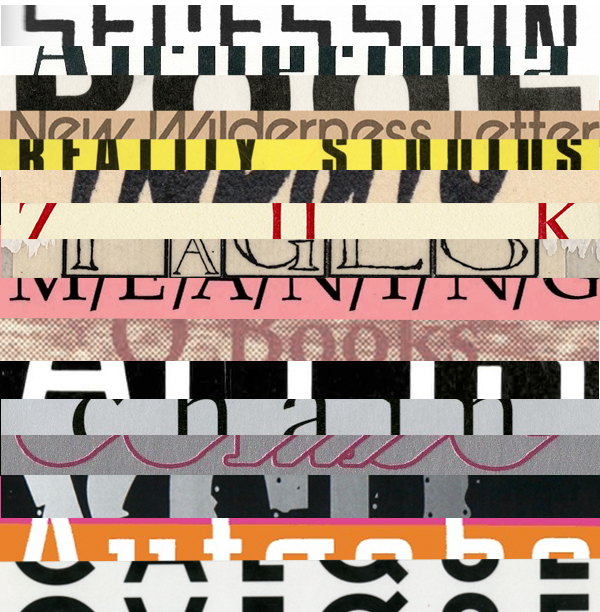
Supplementing the flowing content that characterizes the Jacket2 interface, Reissues offers a stable archive of digitized journals and magazines primarily focused on poetry and poetics. This landing page will feature updated links to the full Reissues inventory as it continues to grow. Reissues is inspired by archival platforms ranging from Eclipse and UbuWeb to The Modernist Journals Project and The International Dada Archive. Just as Jacket2 is built upon the preservation of forty issues of John Tranter’s Jacket magazine, Reissues seeks to re-present periodicals in conversation with contemporary issues in poetics.
We publish fully searchable facsimile PDF editions, scanned in high resolution and organized with bookmarked content for easy navigation to individual works within each magazine. In addition to the PDF features, each issue is accompanied by a full listing of contents arranged by print pagination in an attempt to preserve original formatting where possible. Like PennSound, we focus on free distribution within fair use and permission-based parameters. Links to pages hosting the reissues follow below while the sidebar maintains a complete index to the collection.
Reissues is thrilled to partner with Open Door Archive (ed. Harris Feinsod et al.) to cohost the digital afterlife of the extraordinary journal, XCP: Cross Cultural Poetics (ed. Mark Nowak). If ever a journal might inspire elaborate forms of postdigital crossposting, it’s this one. XCP likely needs no introduction to readers of Jacket2. Over thirteen years and across twenty-three stacked issues, XCP forged a network of global poetics and protest rarely seen in an editorial project. Find full contents and PDFs for each issue here, or download the entire set as a ZIP file [2.3 GB] to read at your leisure. Previous reissues include O Books, Pages, Aufgabe, Calque, Reality Studios, Infolio, New Wilderness Letter, Big Allis, M/E/A/N/I/N/G, Roof, Zuk, Chain, Secession, Alcheringa, and Combo. Shortly forthcoming is an ongoing set of recently scanned magazines including Object, Antennae, Oblēk, Crayon, Vanishing Cab, Hills, Wch Way, and Jimmy & Lucy’s House of “K.” For commentary on reissued material, please jump to Of Periodical Transcoding.
— Danny Snelson, 2.26.2021
Seccession (1922–1924)
Dir. Gorham B. Munson
Editorial Selections from Secession
Download the complete magazine (81 MB)
Secession, founded in 1922 by Gorham B. Munson, sought to give corner to the “youngest generation” of interwar modernists. Printed at various junctures in Vienna, Berlin, New York, Florence, and Reutte (Tyrol), Secession nevertheless became an important platform distributing literary Dadaism to New York.
No. 2, July 1922  |
No. 3, August 1922  |
||
No. 5, July 1923  |
No. 6, Sept. 1923 |
No. 7, Winter 1924  |
No. 8, 1924  |


Alcheringa (1970–1980)
Ed. Dennis Tedlock and Jerome Rothenberg
Dennis Tedlock’s Introduction
Record Inserts [also on PennSound]
External Site [this portion of Reissues operates on ethnopoetics.com]
Download the complete magazine (74 MB)
Alcheringa was a trailblazing ethnopoetics journal edited by Dennis Tedlock and Jerome Rothenberg over a thirteen-issue run from 1970 to 1980. Featuring a diverse array of scholars, ethnologists, poets, and translators, Alcheringa presents a rich and varied historical document while opening a vital set of questions for the practice of poetics and ethnography.
| First Series |
|||
Vol. 1, No. 1, 1970 |
Vol. 1, No. 2, 1971 |
Vol. 1, No. 3, 1971 |
Vol. 1, No. 4, 1972 |
Vol. 1, No. 5, 1973 |
[Note: these issues currently employ external links; PDF links may be found in the sidebar.] |
||
| New Series | |||
Vol. 1, No. 1, 1975 |
Vol. 1, No. 2, 1975 |
Vol. 2, No. 1, 1976 |
Vol. 2, No. 2, 1976 |
Vol. 3, No. 1, 1977 |
Vol. 3, No. 2, 1977 |
Vol. 4, No. 1, 1978 |
Vol. 4, No. 2, 1980 |
Roof (1976–1979)
Ed. James Sherry
Download the complete magazine (461 MB)
In ten packed issues published between 1976 and 1979, Roof’s stable of poets came to define the movement known as Language poetry. The magazine housed an emerging community of writers performing a fantastic — and remarkably focused — set of poetic explorations. A snapshot of the passage from Naropa to the Ear Inn, Roof delivers a captivating narrative of transition in twentieth-century poetry.
| No. I Summer 1976  |
No. II Spring 1977  |
No. III Summer 1977  |
No. IV Fall 1977  |
| No. V Winter 1978  |
No. VI Spring 1978  |
No. VII Fall 1978  |
No. VIII Winter 1978  |
| No. IX Spring 1979  |
No. X Summer 1979  |
New Wilderness Letter (1977–1984)
Ed. Jerome Rothenberg
Download the complete magazine (273 MB)
Immediately following the ethnopoetics journal Alcheringa, Rothenberg’s New Wilderness Letter sends its readers into the “coarse and broad” expanse of poesis. Shaking out the unlikely — and uncharted — wilds of prosodic experiment, the magazine features the anthologizing Rothenberg in top form. Twelve numbers in ten editions, with special issues on the poetry of number, performance, the book, and many other explorations into the news that stays news.
| No. 1 January 1977  |
No. 2 July/August 1977  |
No. 3-4 Dec./Jan. 1977-78  |
No. 5-6 September 1978  |
| No. 7 Summer 1979  |
No. 8 Spring 1980  |
No. 9 Fall 1980  |
No. 10 September 1981  |
| No. 11 December 1982  |
No. 12 (Wch Way 5) 1984  |
|
Reality Studios (1978–1988)
Ed. Ken Edwards
Download the complete magazine (432 MB)
From a monthly mimeograph to the interface of Apple II, Reality Studios gathered a wide range of experiments in language arts across its ten collected volumes. This poetry and poetics magazine hosted, evaluated, and intertwined various strands of international writing, with a special emphasis on Language poetry in the US and the British Poetry Revival in the UK. Questioning the possibilities of oppositional poetics throughout, the magazine adds another layer of complexity to any tidy narrative of late twentieth century poetry.
Vol. 1, 1979 |
Vol. 2, 1980 |
Vol. 3, 1981 |
Vol. 4, 1982 |
Vol. 5, 1983 |
Vol. 6, 1984 |
Vol. 7, 1985 |
Vol. 8, 1986 |
Vol. 9, 1987 |
Vol. 10, 1988 |
Infolio (1986–1991)
Ed. Tom Raworth
Download the complete magazine (103 MB)
With forty daily issues, sixty weekly issues, and sixteen biweekly alphabetical issues, Infolio presented an incredible array of art and poetry over the course of its four years of publication. While inspired by Royet-Journoud’s L’In Plano (and anticipates Zuk, featured here), the aesthetic of Infolio could not be more different. Handwritten editorial notes, just-in-time sketches and collages, colorful cork stamps, and scaled reproductions of manuscript submissions mark Infolio’s exceptional approach to the magazine format.
 |
 |
 |
 |
 |
 |
 |
 |
 |
 |
 |
 |
 |
 |
 |
 |
 |
 |
 |
 |
 |
 |
 |
 |
 |
 |
 |
 |
 |
 |
 |
 |
 |
 |
 |
 |
 |
 |
 |
 |
 |
 |
 |
 |
 |
 |
 |
 |
 |
 |
 |
 |
 |
 |
 |
 |
 |
 |
 |
 |
 |
 |
 |
 |
 |
 |
 |
 |
 |
 |
 |
 |
 |
 |
 |
 |
 |
 |
 |
 |
 |
 |
 |
 |
 |
 |
 |
 |
 |
 |
 |
 |
 |
 |
 |
 |
 |
 |
 |
 |
 |
 |
 |
 |
 |
 |
 |
 |
 |
 |
 |
 |
 |
 |
 |
 |
 |
Zuk (1987–1989)
Ed. Claude Royet-Journoud
“La poésie au format Zuk,” translated from the French by Abigail Lang
Download the complete magazine (57 MB)
Redefining the little magazine, Zuk presented a single sheet folded into four delicate pages measuring just 6.3” high and 4.3” wide. Claude Royet-Journoud released twenty-four issues of Zuk in as many months. Printed in Le Revest-les-Eaux, France, the magazine offered new translations of English and American poetry alongside French poets writing under the sign of Zukofsky.


Pages (1987–1990)
Ed. Robert Sheppard
“On Pages,” an interview between Joey Frances and Robert Sheppard
Download the complete magazine (97 MB)
Sheppard’s singular Pages reopens the poetics of the page alongside a snapshot of “linguistically innovative poetries” in the UK from 1987 to 1990. Breaking with Reissues standards, these scans instead feature the paste-ups for each photocopied edition, as evidenced by a variety of revealing textures, tapes, pastes, and inks throughout. While these material traces seem to affix the magazine to the moment of its production, a close inspection of this “cut-and-paste” digitization may yet turn the reader to the poetics of the present.


M/E/A/N/I/N/G (1986–1996)
Ed. Susan Bee and Mira Schor
Founded in December of 1986, M/E/A/N/I/N/G provided a timely vehicle for an expanded practice of art criticism from its locus in New York City. In twenty issues published over the course of a decade, M/E/A/N/I/N/G offers a wide range of critical perspectives on “contemporary art issues.” Designed by Susan Bee, the 8.5” by 11” magazine is side stapled for the first four issues and perfect bound thereafter.


O Books (1988-2009)
Ed. Leslie Scalapino et al.
Download the complete magazine (60 MB)
Tracking a range of editorial projects initiated by Leslie Scalapino, this reissue includes four groundbreaking O Books anthologies, an urgent one-off periodical with Rick London, and the expansive War & Peace magazine project coedited with Judith Goldman. These projects offer a concentrated distillation and an expansive addition to Scalpino’s unparalleled and prolific publishing work at O Books over the same period. Throughout, these experiments circle the points at which politics and poetics might meet.
O/One, 1988 |
O/Two, 1991 |
O/Three, 1993 |
O/Four, 1993 |
enough, 2003 |
|||
| War & Peace, 2004  |
War & Peace 2, 2005  |
War & Peace 3, 2007  |
War & Peace 4, 2009  |
Big Allis (1989-2000)
Ed. Melanie Neilson and Jessica Grim
Introduction and Commentary on the Digital Reissue of Big Allis
Download the complete magazine (133 MB)
Rising out of New York City in the nineties, Big Allis generated a wide array of innovative writings — primarily composed by women — over a vibrant decade in American poetics. The magazine pays homage to its supergenerator namesake with an electrifying body of literary experiment arcing across its nine tightly constructed issues.
No. 1, 1989 |
No. 2, 1989  |
No. 3, 1990 |
|
No. 4, 1991 |
No. 5, 1992  |
No. 6, 1993 |
|
No. 7, 1996 |
No. 8, 1998 |
No. 9, 2000 |
Chain (1994–2005)
Ed. Jena Osman and Juliana Spahr
Some Facts About Chain
Chain was founded at the State University of New York, Buffalo in 1994. Each of the twelve issues of Chain is organized around a special topic with the content organized alphabetically by author. Under the editorship of Osman, Spahr, and others, this magazine presents an expansive index to key concerns in poetic practices around the turn of the millenium.


Combo (1998–2003)
Ed. Michael Magee
Editorial Selections from Combo
Download the complete magazine (204 MB)
Edited by Michael Magee and published in association with the Kelly Writers House, Combo published a vital selection of younger poets over its twelve-issue run from 1998 to 2003. Over the course of these twelve issues, a reader might chart the emergence of Flarf and related developments in poetry around the millennium.


XCP: Cross Cultural Poetics (1997–2010)
Ed. Mark Novak
Download the complete magazine (2.3 GB)
Reissues is thrilled to partner with Open Door Archive (ed. Harris Feinsod et al.) to cohost the digital afterlife of the extraordinary journal, XCP: Cross Cultural Poetics (ed. Mark Nowak). Over thirteen years and across twenty-three stacked issues, XCP forged a network of global poetics and protest rarely seen in an editorial project. Anticipating the dynamic cross-cultural conversations that came to shape poetry and poetics online in the 2010s, XCP remains an inspiring model for thinking poetry against borders.


Aufgabe (2001–2014)
Ed. E. Tracy Grinnell et al.
Aufgabe was initiated by E. Tracy Grinnell in the Bay Area in 1999 to challenge “static cultural modes of thinking and being,” through poetry and poetics in dialog with translation. The first issue was released in 2001. Each issue features a special section on a geographically-focused area of translation paired with selections of contemporaneous poetry and poetics. In every instance, Aufgabe is in the service of the co-elaboration, among the operations of translation, poetics, and publication, between intimate communities and the most dispersed international audiences. Aufgabe presents a singular perspective on the urgency of global poetic practice, speaking directly to the present from each page of the thirteen volumes digitized below.
No. 1, Summer 2001 |
No. 3, Fall 2003  |
No. 4, Fall 2004 |
|
No. 5, Fall 2005 |
No. 6, Spring 2007  |
No. 7, 2008 |
No. 8, 2009 |
No. 9, 2010 |
No. 10, 2011 |
No. 11, 2012 |
No. 12, 2013 |
No. 13, 2014 |

Calque (2007–2009)
Ed. Brandon Holmquest and Steve Dolph
Download the complete magazine (302 MB)
Over the course of five issues, Calque published a tremendous set of translations of new and archival works with an emphasis on the transformative poetics of translation as a creative act. Drawing from a global range of experimental poetry, Calque distinctively includes extensive translators’ notes preceding translations published en face with original texts.
No. 1, Jan 2007 |
No. 2, May 2007  |
No. 3, Nov 2007 |
|
No. 4, Spring 2008 |
No. 5, Spring 2009  |
