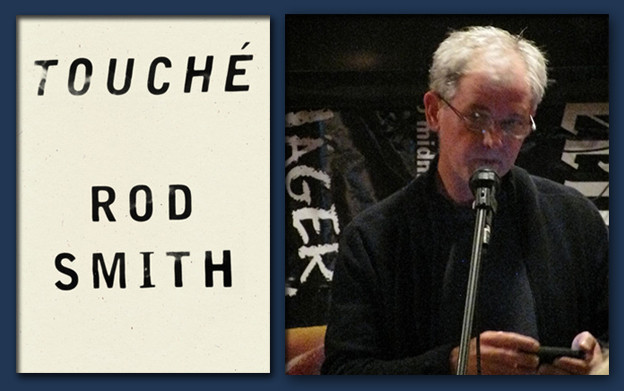
A review of Rod Smith's 'Touché'
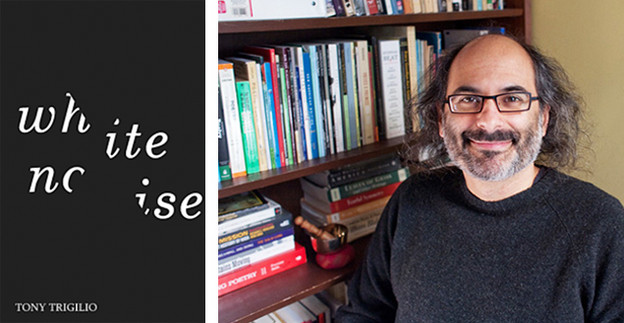
In Wave Books’s new Touché, Rod Smith is a tender, often hilarious skeptic. His brilliance as a poet is strongest performing the many voices of willful ignorance and hard-earned perspective, often confusing the two in poetry that merges personal doubts with public ones. Built on a negative capability, Touché’s “futility as figurative / extreme” (81) is strikingly analytical about uncertainties in private awareness, domestic American politics, and the malleable referentiality of language in relation to the author’s scatological, punny, and aesthetically “clumsy” organizations of it, much more punk rock in Smith’s DIY grammatics than actual idiocy.



Michael Magee, 'Morning Constitutional'
Thanks to PennSound staffer Hannah Judd, a November 2001 reading of Morning Constitutional Michael Magee gave at the Kelly Writers House — with Louis Cabri — has been segmented. Magee's book Morning Constitutional was published in 2001. Publisher's Weekly observed: “A breadcrumb trail of juiced urban monologues, phrasal runs somewhere between Dolphy and Sun Ra, rope-a-dope reports from a guarded ordering bordering on an underdog corner restoration and definitional clarity (a slush fund is dirty money) mark these ante-meridian outings, exercising our rights and outlining the space between our laws.” Magee walked Philadelphia in the mornings and these poems densely record his observations, debris-like.
Michael Magee's book Morning Constitutional was published in 2001. Publisher's Weekly observed: “A breadcrumb trail of juiced urban monologues, phrasal runs somewhere between Dolphy and Sun Ra, rope-a-dope reports from a guarded ordering bordering on an underdog corner restoration and definitional clarity (a slush fund is dirty money) mark these ante-meridian outings, exercising our rights and outlining the space between our laws.” Magee walked Philadelphia in the mornings and these poems densely record his observations, debris-like. The book is still available for purchase. Philip Metres wrote about it for Jacket in May 2003.
Now, thanks to PennSound staffer Hannah Judd, a November 2001 reading Magee gave at the Kelly Writers House — with Louis Cabri — has been segmented.