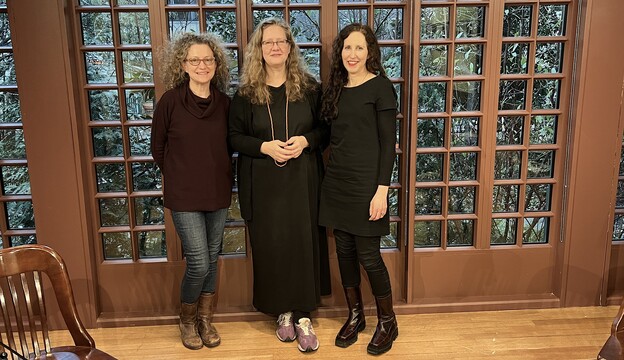
Al Filreis and three interlocutors — Kristen Gallagher, Lee Ann Brown, and Laynie Browne — met up at the Kelly Writers House in Philadelphia to talk about Diane di Prima’s collection (and ongoing project) of quasi-epistolary poems, Revolutionary Letters. The group discussed three poems: #16 (“We are eating up the planet”), #19 (“If what you want is jobs”), and #27 (“How much can we afford to lose before we win”). Di Prima began writing the letters in 1968, and they were first gathered and published by City Lights in 1971. A red-covered fiftieth anniversary edition was issued by City Lights in 2021. Our recordings of di Prima performing these three poems come from various sources and are available at the di Prima PennSound page: for #16 we hear a a recording made in 1969, while for #19 we have undated tape (possibly 1982), and for #27we hear a performance given at Naropa in 1978.
Writing that tends to take an anthropocentric consideration of the physical world — e.g., a traditional nature writing that privileges human observation — implies a certain hierarchical separation between subject and material. It is the same assumption that leads to the glaring dismissal of other actants, especially those considered to be alien (i.e., not human). When the fantasy of privileged human experience is dissolved, there is an equitable condition, where people and their environments are slipped, or perhaps coerced, into substance.
Kristen Gallagher, Kerry Sherin Wright, and Joshua Schuster converged on Philadelphia to help us celebrate twenty years of the Kelly Writers House. Al Filreis took the opportunity of this reunion of KWH founders to convene a PoemTalk session on the work of a fourth founder — Michael Magee. This was Magee in his pre-Flarf days, the late 1990s. He was finishing a doctoral dissertation on Emerson, pragmatism, Ellison, and jazz; was beginning a relationship with the person, now his partner, who had created the Kensington Needle Exchange; and was taking long, daily morning Emersonian/Whitmanian constitutionals, walking the city incessantly described as the cradle of constitutional democracy. The book of poems resulting from these experiences was Morning Constitutional.
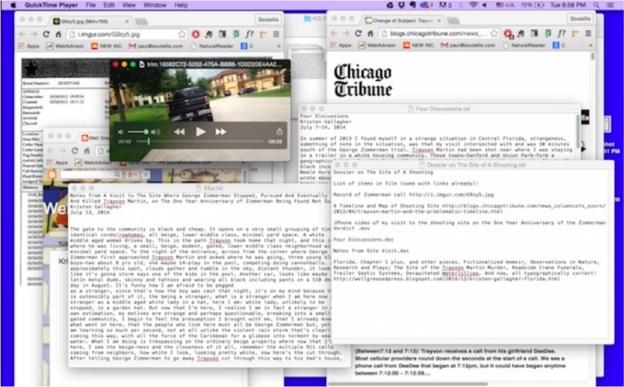
From 'Dossier on the Site of a Shooting.' Image by Paul Soulellis.
Three things I do:
1. Dossier
“Dossier on the Site of a Shooting,”[1] published by GaussPDF in March 2015, presents pieces of evidence I gathered in an attempt to better understand the Trayvon Martin murder, the George Zimmerman acquittal, the lack of protest in Sanford emphasized in the news: notes from the site visit, silent iPhone video recording of the site, written site description, interviews with residents of Sanford, Google Maps screen shots, and other web media such as news accounts.
Al Filreis convened Kristen Gallagher, Kathy Lou Schultz, and Bruce Andrews for a conversation about a poem by Bob Perelman, “Confession,” which the poet once introduced (jokingly, yes?) as “the inside story of Language writing.” “Confession” was published as the first poem in — indeed, arguably it serves as a proem to — Perelman’s book The Future of Memory. Its speaker satirically imagines that avant-garde poets had been abducted by aliens, in the manner of 1950s science fiction.
Tracie Morris, Kristen Gallagher, and Michael Magee gathered together in PoemTalk’s garrett studio to discuss a poem by Will Alexander: “Compound Hibernation,” published in Zen Monster, then performed at least once at a reading (Alexander’s Segue Series performance at the Bowery Poetry Club in March of 2007), and then collected in the bookCompression & Purity (City Lights, 2011).
In October of 2000, Lisa Robertson presented along with Steve McCaffery at the seventeenth episode of PhillyTalks. She read from a then-new work, The Weather, just a few months before the book’s publication by New Star in Vancouver (2001). Here are the segments from that 2000 reading: “Monday” (2:10): MP3; “Tuesday” (7:06): MP3; “Wednesday” (2:14): MP3; “Thursday” (6:38): MP3; “Friday” (9:16): MP3; “Saturday” (4:02): MP3. The book-length project, organized as such by days of a/the/every week, was in part stimulated by the poet-researcher’s experience during a six-month Judith E. Wilson Visiting Fellowship at Cambridge University: as a non-local, she found herself listening to late-night weather and shipping reports on the British radio, discerning there and elsewhere a specifically localized language that seemed abstract and was yet radically precise.
I wanted to do this special feature for Jacket on the work of Bob Perelman because I noticed a dearth of writing available on the internet about his work. There is a fair amount written about Language Poetry in general, and more if you have access to the search engines JSTOR, Project Muse, etc., or if you know how to search recent dissertations. But even then, I was surprised to find fewer essays focusing on Perelman alone than I had hoped for.[...] So I decided to edit a collection, and a special issue of Jacket seemed the obvious choice. I knew their editors liked this kind of work and, rather than edit a book, I chose the format of easily accessed online materials to best serve the largest audience. Books take forever and not many people buy them anymore. I wanted people to have access to this as soon as possible and for free. — Kristen Gallagher, from her Introduction
[»»]Kristen Gallagher: Introduction [»»]Bob Perelman: Biographical Note [»»]Rae Armantrout: Bob Perelman’s Grammatology [»»]Charles Bernstein: The Importance of Being Bob [»»]Louis Cabri: Poems [»»]Al Filreis: The President of This Sentence: Bob Perelman’s History [»»]Kristen Gallagher: Teaching Bob Perelman’s “The Story of My Life”
Culminating in an all-Flarf twelfth issue, Combo is known to have been the first print publication to gather a full collection of Flarf poems. Published in the same year as K. Silem Mohammad’s Deer Head Nation (poems from which were also first published in Combo) the magazine stands as the original print vehicle for the listserv-generated poetry movement. Magee’s Flarf manifesto “Mainstream Poetry” is first published here, and the editor’s and contributor’s notes are ideally suited to the collection (see Combo no. 12). As Jordan Davis writes in his 2004 Village Voice article “O, You Cosh-Boned Posers!”:
Magee's small-press magazine Combo broke the flarf story first, in early 2003. A significant finding in that issue, currently required reading for Charles Bernstein’s literature students at the University of Pennsylvania, is that Google searches on the phrase "aw yeah" yield more socially acceptable results as the number of w's in "aw" increases.
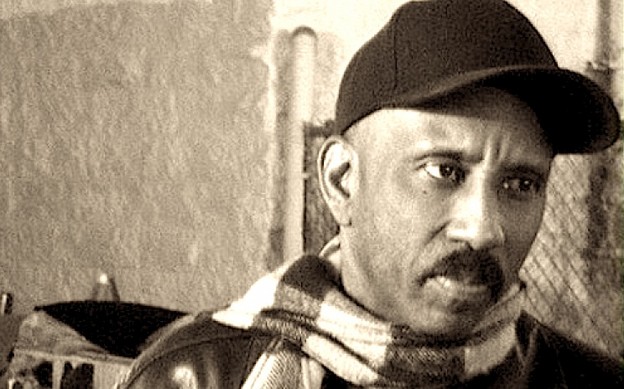
Preface to a Twenty Volume Suicide Note, LeRoi Jones’s first book, was composed between 1957 and 1961. [1] Arranged chronologically, the book feels distinct from the work Jones/Baraka is known for. That work, tho suggested here in isolated snatches, is yet to be written. In this sense the book truly is a “preface.”


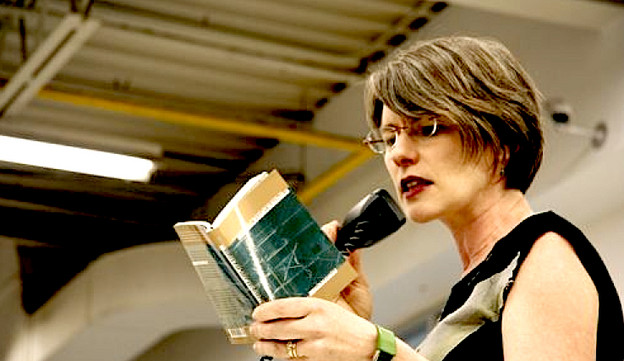


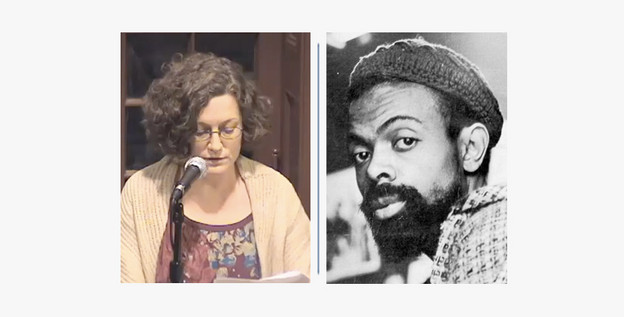

Feature: Bob Perelman, edited by Kristen Gallagher
300 printed pages, in Jacket 39
I wanted to do this special feature for Jacket on the work of Bob Perelman because I noticed a dearth of writing available on the internet about his work. There is a fair amount written about Language Poetry in general, and more if you have access to the search engines JSTOR, Project Muse, etc., or if you know how to search recent dissertations. But even then, I was surprised to find fewer essays focusing on Perelman alone than I had hoped for.[...] So I decided to edit a collection, and a special issue of Jacket seemed the obvious choice. I knew their editors liked this kind of work and, rather than edit a book, I chose the format of easily accessed online materials to best serve the largest audience. Books take forever and not many people buy them anymore. I wanted people to have access to this as soon as possible and for free. — Kristen Gallagher, from her Introduction
[»»] Kristen Gallagher: Introduction
[»»] Bob Perelman: Biographical Note
[»»] Rae Armantrout: Bob Perelman’s Grammatology
[»»] Charles Bernstein: The Importance of Being Bob
[»»] Louis Cabri: Poems
[»»] Al Filreis: The President of This Sentence: Bob Perelman’s History
[»»] Kristen Gallagher: Teaching Bob Perelman’s “The Story of My Life”