IN THE first election year that mattered to me, 1968, Martin Luther King and Bobby Kennedy were assassinated, my country killed hundreds of thousands of people in Southeast Asia, and Richard Nixon was elected president. In the decades that followed, I have always been unhappy with the leadership and direction of this country, usually very unhappy.
Michael Ruby
I was born a believer in peace. I say fight for the right. Be a martyr and live. Be a coward and die.
— Susan B. Anthony speaking in Gertrude Stein’s “The Mother of Us All”
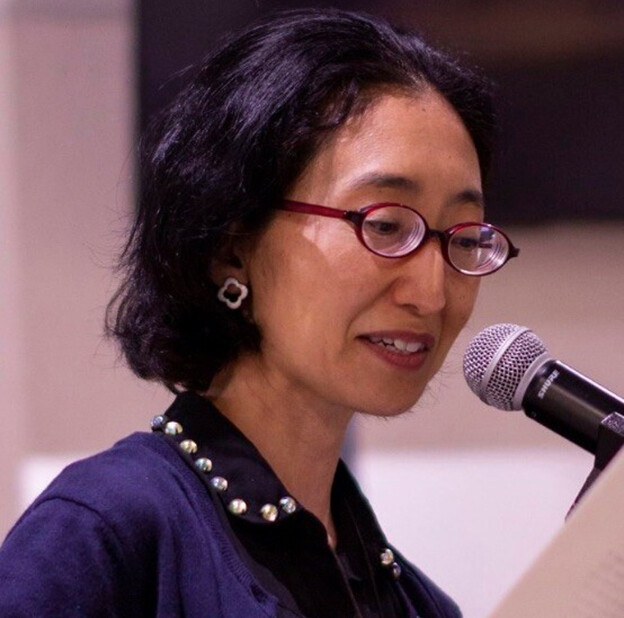
Sawako Nakayasu was born in Japan and raised in the US; she has also lived in France and China along the way. Her most recent books are The Ants (Les Figues Press, 2014), and Texture Notes (Letter Machine, 2010), and recent translations include The Collected Poems of Sagawa Chika (Canarium Books, 2015) and Tatsumi Hijikata’s Costume en Face (Ugly Duckling Presse, 2015).
The purpose of Spells is made clear in many ways, from the chant-like lyrical prose introduction “The Broken Open” by So Mayer to the subtitle: “21st-Century Occult Poetry.” This is a book of poetry that does magic, that believes in the magic of word-casting and spell-ing. Spells introduces a variety of ways to spell in poems from a diverse cast of poets who echo the ideas of precursors like Ursula K. LeGuin: by naming something, magic is done and change is created.
Language work is a making and remaking of the world around us, a casting of spells: “To be a witch, then, is to know words.”[1] Spells, an anthology edited by Sarah Shin and Rebecca Tamás, attempts to show the magical side of poetry and “the moment before the word, when everything inside you is broken open” (ix).
PennSound’s Jonas Mekas page includes two readings, both in the Segue series — one from 2006 and a second from 2015. And a bonus track: Allen Ginsberg performing “Sunflower Sutra,” an audio clip from a 1960 Mekas film. Thanks to the efforts of PennSound staffer Luisa Healey, we now offer segmentations from the two Segue readings. In 2006, he read “End of the Year Letter to Friends” (13:28).
Michael Hennessey, one of the founding participants of the PennSound archive, and now its editor, stopped by the Wexler Studio of the Kelly Writers House a few months back. He and Al Filreis played and discussed five recordings Mike chose from among the tens of thousands of recordings available in the archive: Bernadette Mayer, “Chocolate Poetry Sonnet”: LINK; Allen Ginsberg, “After Lalon”: LINK; Lew Welch, “A Round of English”: LINK; Harryette Mullen, “Sleeping with the Dictionary”: LINK; and Tuli Kupferberg, “The Hidden Dissuaders”: LINK.
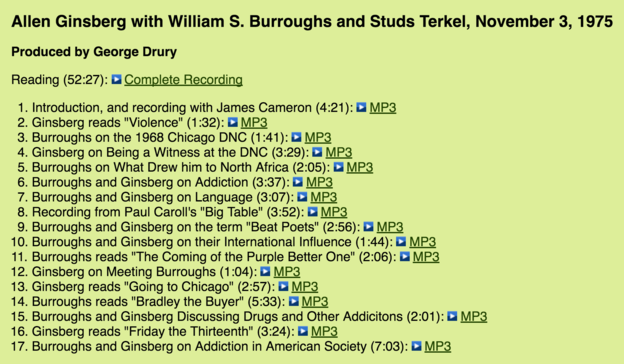
Ginsberg & Burroughs talking with Studs Terkel — a PennSound recording now segmented into topics. It is now available at PennSound’s Allen Ginsberg page. (Many thanks to Domenic Gibby Casciato, PennSound staffer, for expertly doing the segmenting.)
Ginsberg & Burroughs talking with Studs Terkel — a PennSound recording now segmented into topics. It is now available at PennSound’s Allen Ginsberg page. (Many thanks to Domenic Gibby Casciato, PennSound staffer, for expertly doing the segmenting.)
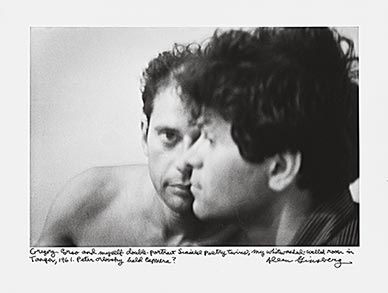
Thanks to George Drury, who is working on the Studs Terkel archive, PennSound has just made available a delightful and wacky 30 minute recording of Allen Ginsberg, Gregory Corso and Peter Orlovsky on Studs Terkel’s WFMT (Chicago) radio show in 1959. They were in Chicago to support Paul Carroll’s Big Table.
“… that which is sacrificed (the lamb, the deer, the ram, the boy, the girl, the body) and that to which it is sacrificed (the prima causa, but of course if it needs sacrifice to function then isn’t the sacrifice itself the prima causa?) call out to each other with images of flora and fauna…”
The Google map below shows places, dates, and events from Artaud’s life. The red symbols mark biographical elements, the yellow symbols mark performance- or art-based elements, and the blue symbols mark Artaud’s continuing legacy. Where possible there are photographs, video, or links to further materials.
The Google map below shows places, dates, and events from Artaud’s life. The red symbols mark biographical elements, the yellow symbols mark performance- or art-based elements, and the blue symbols mark Artaud’s continuing legacy. Where possible there are photographs, video, or links to further materials.
New at PennSound. In a 1978 appearance on the "Stonewall Nation" radio program (WBFO-FM), Allen Ginsberg talks about coming out to his family: http://bit.ly/1wEQMen. Here is a link to the entire recording of the program.


American poetry and political defeat
by Michael Ruby
IN THE first election year that mattered to me, 1968, Martin Luther King and Bobby Kennedy were assassinated, my country killed hundreds of thousands of people in Southeast Asia, and Richard Nixon was elected president. In the decades that followed, I have always been unhappy with the leadership and direction of this country, usually very unhappy.
Michael Ruby
I was born a believer in peace. I say fight for the right.
Be a martyr and live. Be a coward and die.
— Susan B. Anthony speaking
in Gertrude Stein’s
“The Mother of Us All”